
There’s a common belief that a luxurious-looking home needs a luxurious budget. I don’t think that’s true. When I look at rooms that feel high-end, it’s rarely because of one expensive piece. It’s the soft lighting, the layered colors, the calm surfaces and the little details that look like someone chose them on purpose.
In this post I’m sharing 11 ideas that can help you get that look without overspending. Some are completely free, some cost very little, and a few are worth saving up for. You don’t have to do them all. Even three or four will change how your home feels.
First, Decide What Luxury Means to You
Before buying anything, I’d suggest taking a moment to think about what “luxury” means for you. For some people it’s a calm, spa-like bedroom. For others it’s a dramatic dining room with deep colors and gold touches. There’s no single right answer.
A simple way to find your style is to open Pinterest and save 30 to 50 rooms that you love, without overthinking it. After a few days, look at your board and notice what keeps repeating. Maybe it’s warm neutrals, brass lights, or lots of plants. Write that down in three words, like “warm, simple, textured,” and use it as a filter every time you want to buy something. If it doesn’t fit those words, skip it. This one habit will save you more money than any sale.
1. Declutter Before You Buy Anything
This is the cheapest upgrade of all, and it costs nothing. Even a beautiful room looks ordinary when every surface is covered in mail, chargers, toys and half-used bottles. Clear space is what makes a room look expensive.
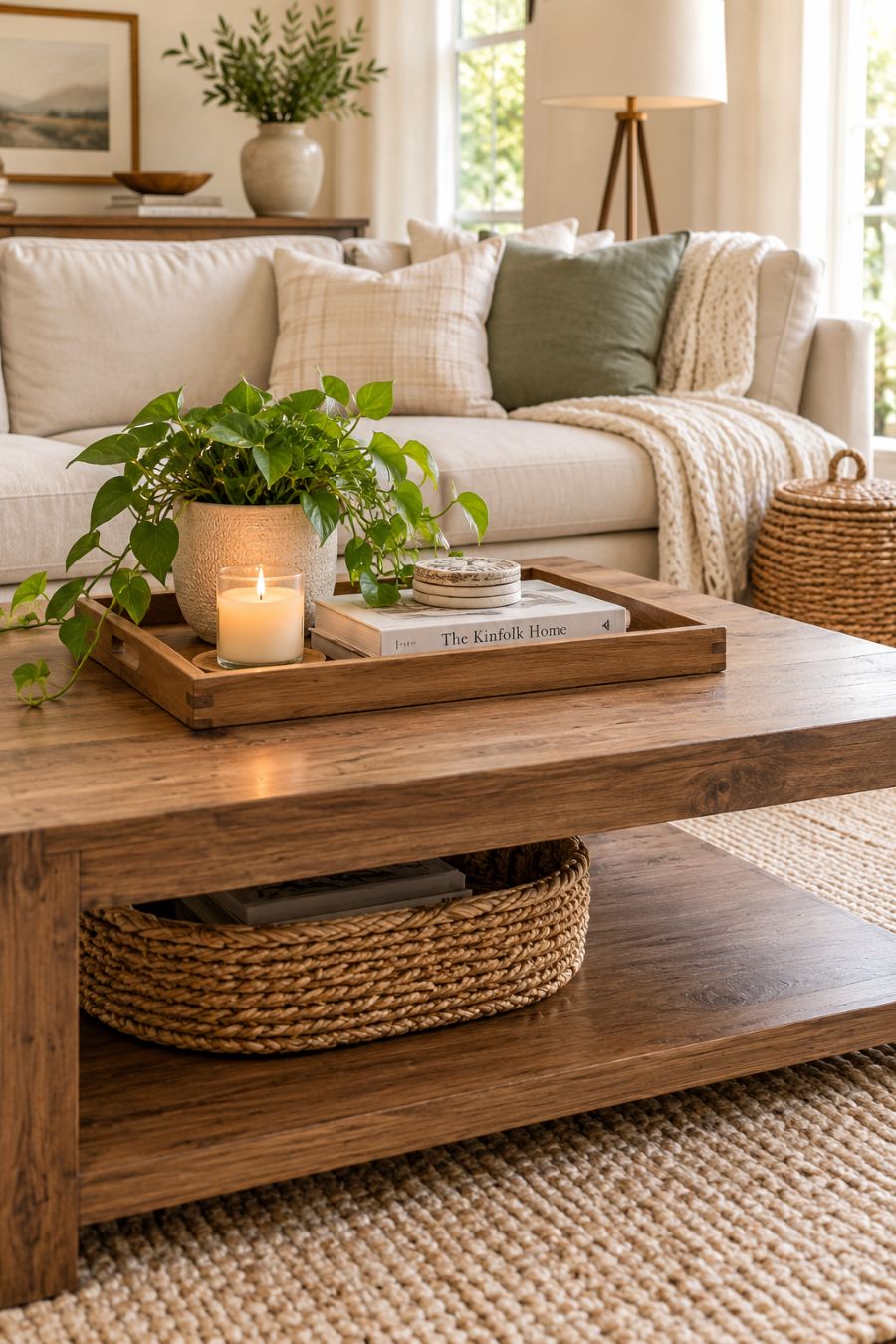
Start with the spots people see first: the coffee table, kitchen counter and entryway. Give every item a proper place, and if something has no purpose and no place, let it go. For the small things you do want to keep out, like remotes, candles and keys, a nice tray makes them look styled instead of messy. Baskets with lids and storage ottomans are also great for hiding everyday items.
One mistake I see often is buying storage boxes before removing anything. Remove first, then organize what’s left.
2. Fix Your Lighting
Lighting changes the feel of a room more than almost anything else. A single harsh ceiling light makes even a nice space feel flat, while soft, layered light makes it feel warm and rich.
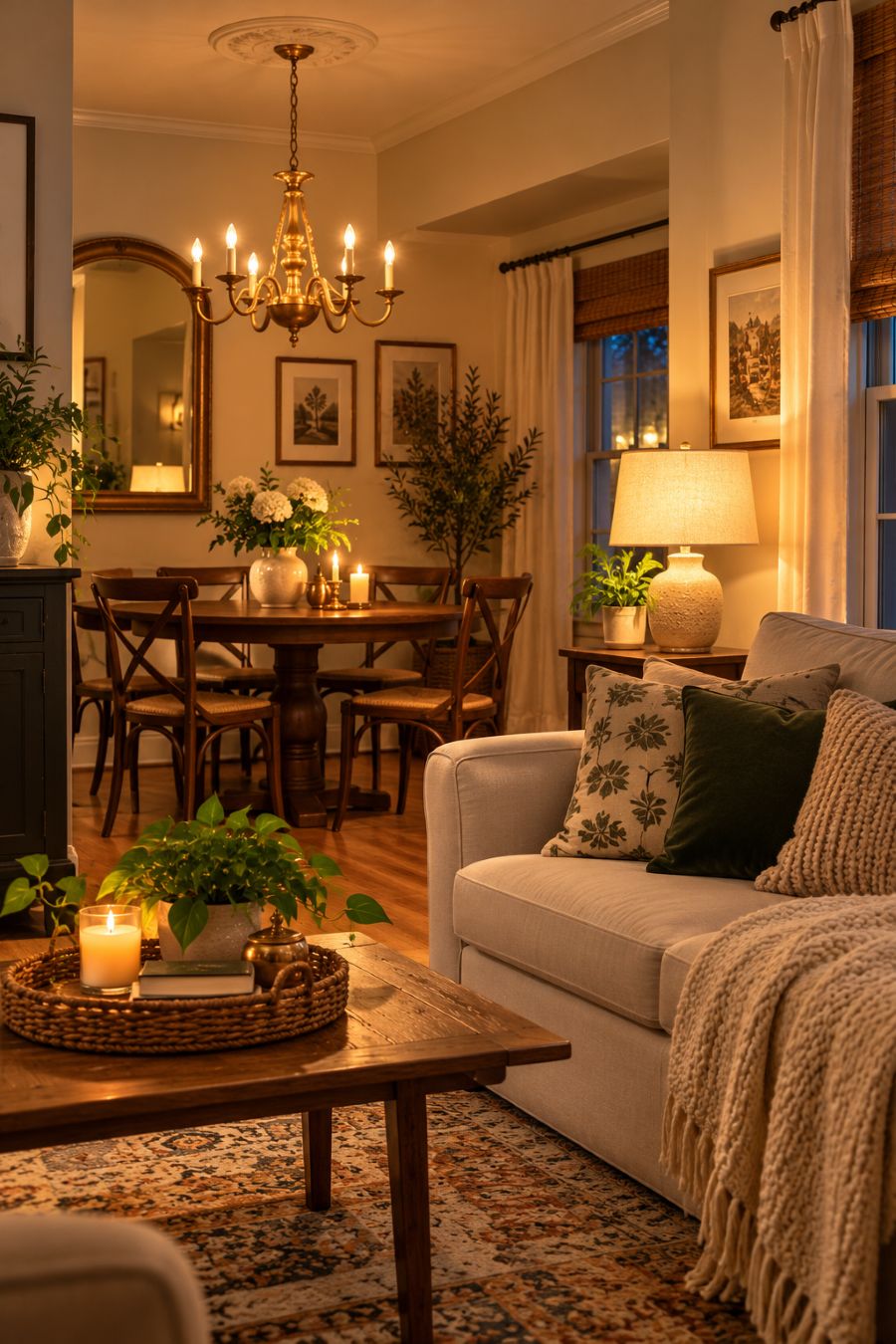
Here’s what I’d do:
- Add dimmer switches. They’re inexpensive, and they let you set the mood for movie night, dinner or a quiet evening.
- Switch to warm white bulbs. Cool, bluish bulbs make a home feel like an office.
- Use more than one light source in each room, such as a ceiling light, a table lamp and a reading light.
- Add one statement fixture. A chandelier over a bed, bathtub or dining table instantly adds drama, and you can often find beautiful ones in thrift shops, flea markets and online resale groups.
- Give old fixtures a new life with metallic spray paint in gold, brass or black.
3. Choose a Rich, Layered Color Palette
Paint is one of the most affordable ways to change a room, and the right colors can make simple furniture look designer-picked.
If you like a calm, elegant look, go for soft neutrals like cream, sand, warm white and light grey. The trick is to layer several shades together. One flat color can look dull, but a few related tones look rich and warm. If you want something bolder, deep navy, plum, forest green and burgundy give a room a grand, dramatic feel. Just balance dark walls with lighter fabrics, mirrors and a few metallic touches so the room doesn’t feel heavy.
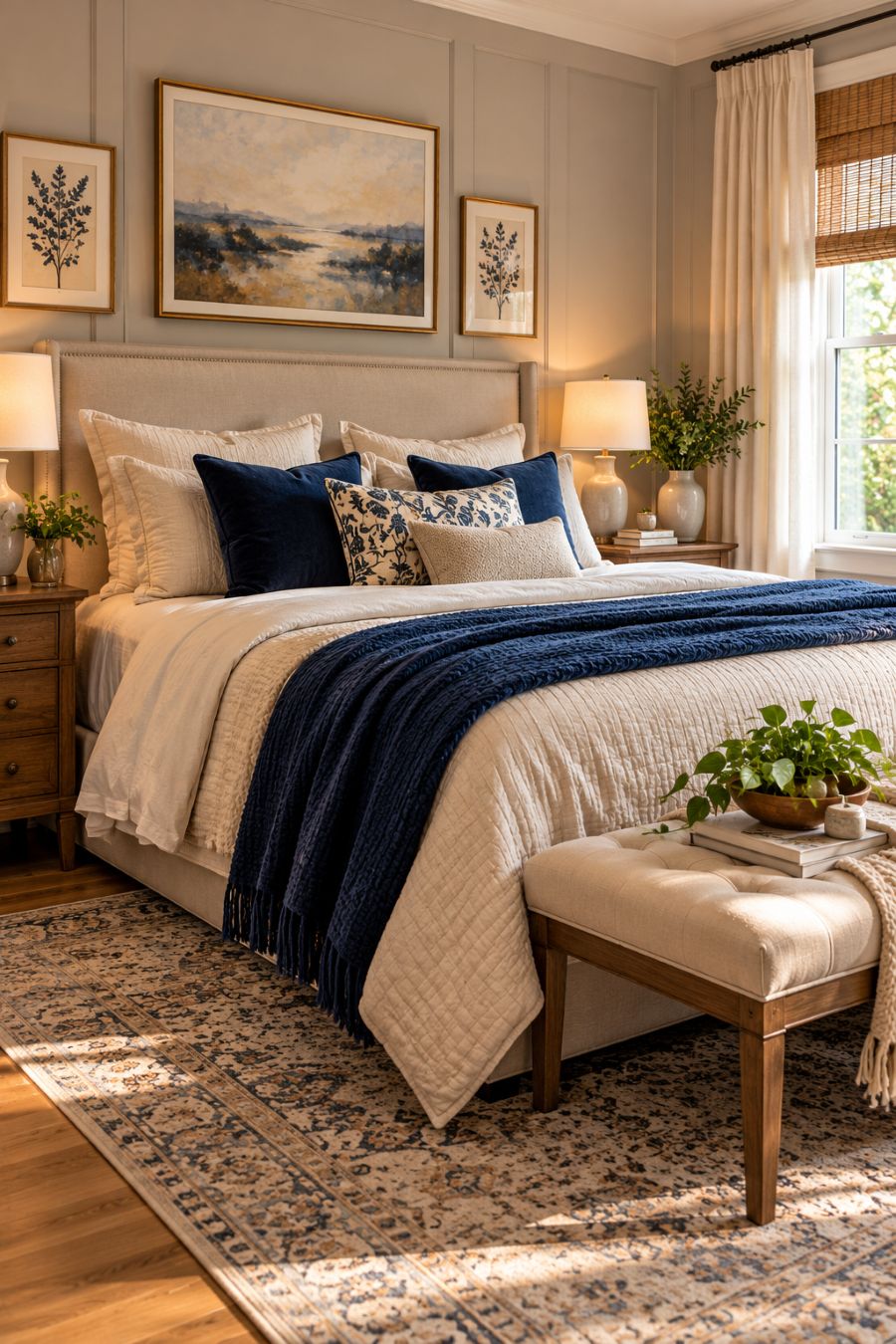
A simple rule is to use about 60% of a calm base color, 30% of a second color, and 10% of an accent. Also think about what the room is for. Soft blues and warm beiges are lovely in a bedroom, while a home office feels better with muted greens or blues that help you focus.
4. Hang Floor-Length Curtains
Curtains are one of the quickest ways to make a room look finished. Short curtains or bare windows can make a space feel temporary, while full, floor-length drapes look elegant and expensive.
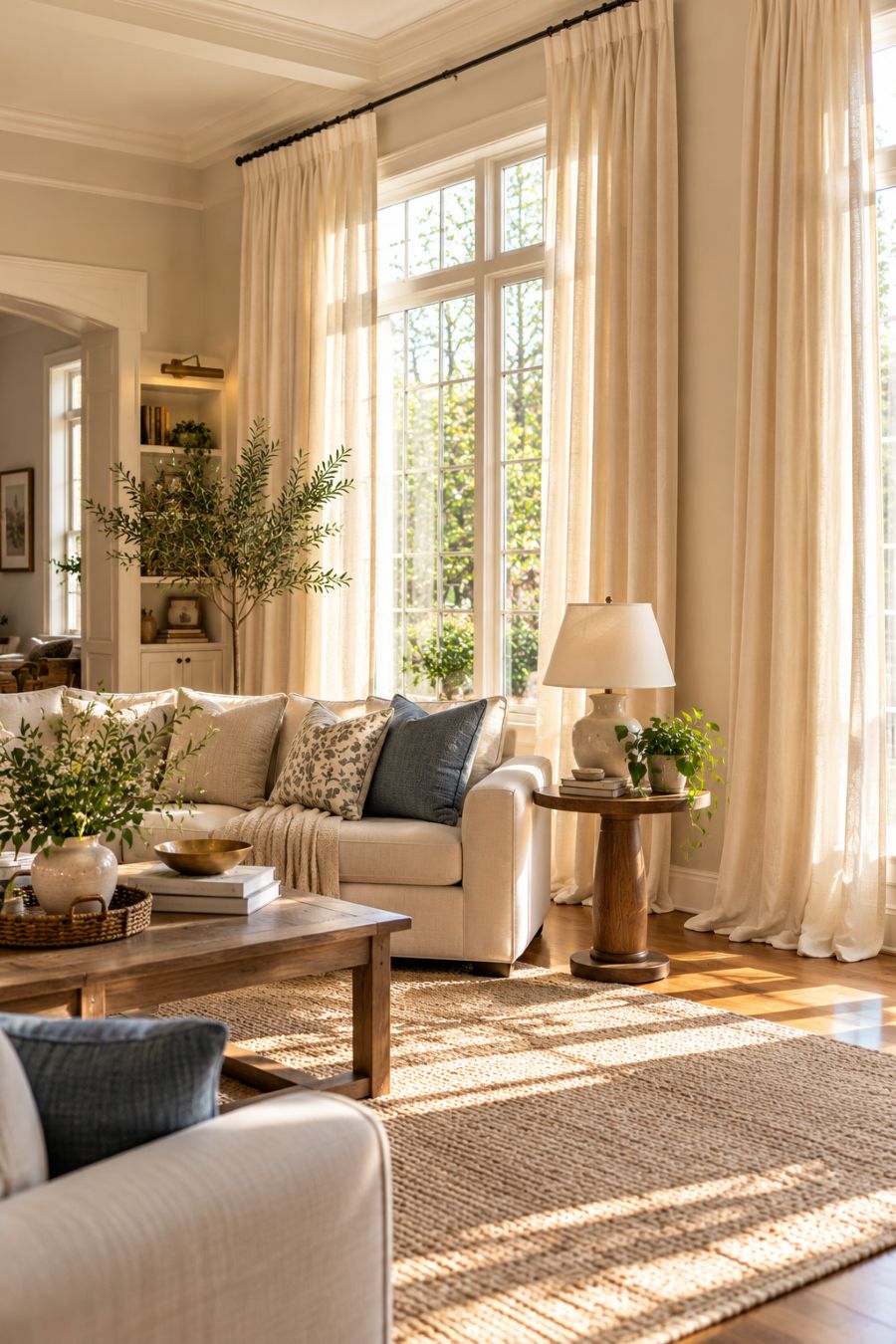
There are a few small details that make a big difference. Hang the rod high, close to the ceiling, so the room feels taller. Let the rod extend wider than the window so the curtains frame it without blocking light. Choose a length that just touches the floor, or lets the fabric puddle slightly if you want a more formal look. Thicker fabrics like velvet, linen blends and heavy cotton hang much better than thin, shiny ones. And buy enough fabric so the curtains look full even when closed. Raising and widening the rod costs nothing extra, but it makes a surprising difference.
5. Give Your Walls Some Personality
Blank walls can make a room feel unfinished, but you don’t need to spend a lot to fix that.
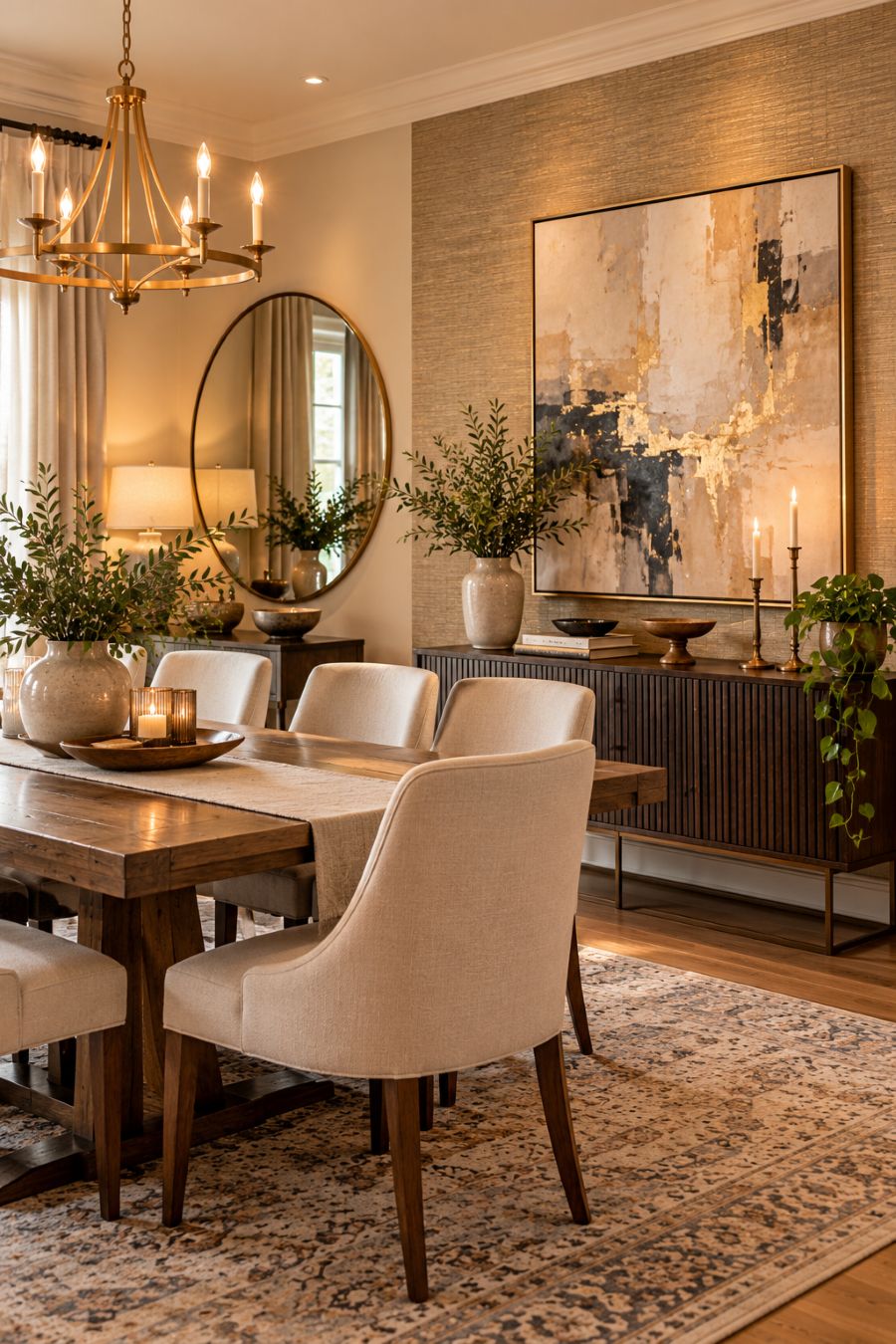
One large piece of art usually looks bolder and more expensive than a cluster of tiny frames. If you like gallery walls, keep the frames in a matching color so it looks planned. A large mirror is another great option because it bounces light around and makes the room feel bigger. Wallpaper on a single accent wall, behind a bed or sofa for example, adds depth too, and textured, metallic or elegantly patterned styles look the most high-end. If you rent, peel-and-stick wallpaper is a good choice. Even simple things like fabric swatches, postcards or your own photos look special in good frames with wide mats. Just remember to hang art at eye level, because it’s easy to put it too high.
6. Add Classic Architectural Details
Trim and molding give a home the kind of character you see in expensive houses, and they’re great beginner DIY projects.
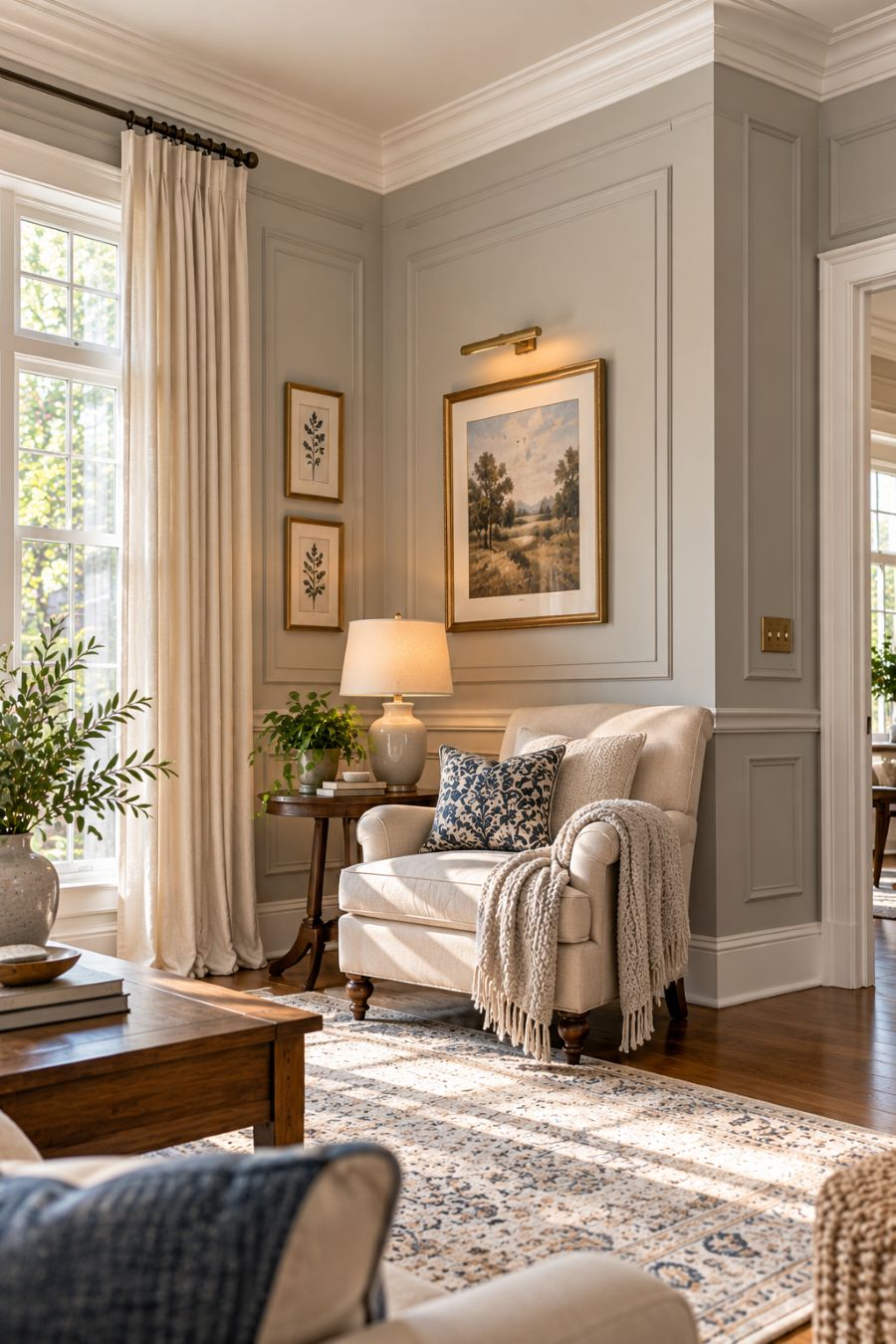
Crown molding adds a finished edge where the wall meets the ceiling. Chair rail or wall paneling adds depth and a traditional feel. Taller baseboards make the whole room feel more solid, and simple molding frames painted the same color as the wall can give a custom, upscale look. Painting the molding and walls in the same color, or the molding in a slightly lighter shade, looks especially elegant. Take a little time to fill gaps with caulk and sand the surface before painting, because that’s what makes the finish look crisp and professional.
7. Mix in Metallic Finishes
Small metallic touches add glamour and reflect light around the room, and they’re easy to do yourself.
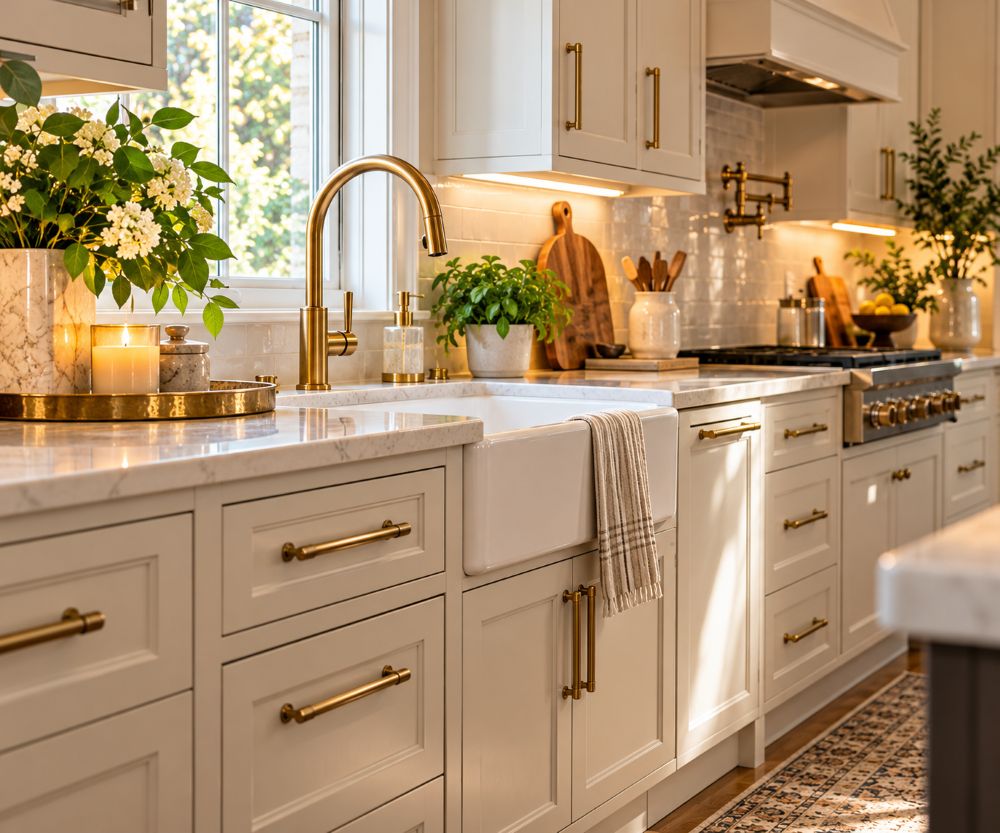
You can change cabinet knobs, drawer pulls, door handles, faucets and light-switch plates, or add metallic picture frames, trays and candle holders. Gold and brass feel warm and classic, rose gold feels soft and modern, polished silver looks clean and crisp, and matte black adds a bold contrast. Antique shops, flea markets, salvage yards and hardware stores often have unusual pieces at good prices, and spray paint can refresh hardware you already own. My one tip is to stick to one or two metal finishes and repeat them through the room, so it looks planned instead of random.
8. Use Luxe Materials in Small Doses
Marble, real hardwood and natural stone are beautiful, but they’re expensive. The good news is that you don’t need them everywhere.
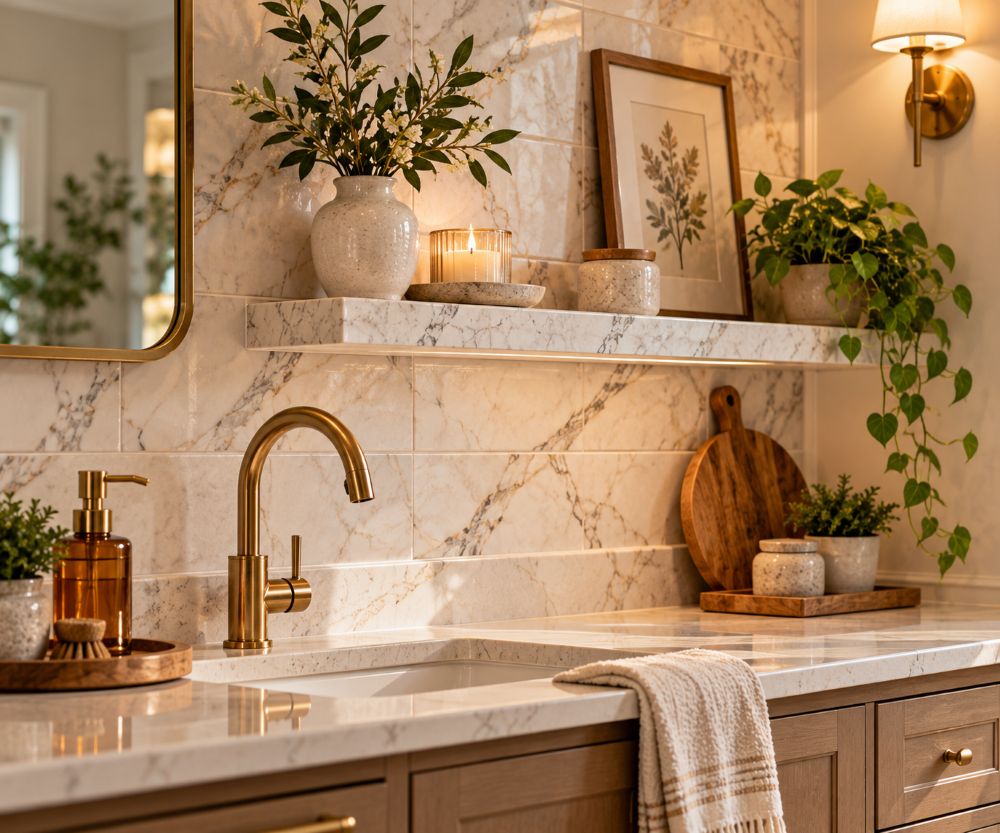
Try using them in small, high-impact places, like a marble tray, a stone-look shelf, a small marble side table or a marble-pattern tile backsplash. Wood-look tile is another smart choice that gives you the warmth of wood at a lower price. Choose one hero material for each room and let everything else support it. Good quality imitations work best in small areas, while large fake surfaces can look cheap.
9. Choose Simple, Well-Made Furniture
Furniture takes up the most visual space in a room, so this is where it’s worth being selective, and where I’d spend more if the budget allows.
Look for clean lines, because simple shapes age better than trendy details. Check the quality of the frame, joints and cushions. Neutral upholstery is a safe base, and you can add color with pillows and throws. Make sure the size is right for the room too, since furniture that’s too big or too small looks off. Spend more on the things you use every day, like the sofa, mattress and dining chairs, and save on side tables and accessories. Secondhand shops and estate sales often have solid wood pieces that look custom with a bit of paint or new hardware. And try not to buy a full matching set, because mixed pieces look more collected and personal.
10. Bring Nature Indoors
Flowers and plants add life, color and softness to any space, and they make a home feel fresh and cared for.
Fresh flowers on a coffee table, dining table or kitchen counter are lovely, and good quality faux stems in a heavy vase can look great too. Easy plants like snake plants, pothos and rubber plants are perfect if you’re not a gardening expert, and a large plant in a basket can fill an empty corner beautifully. Odd numbers of stems or plants tend to look more natural, and one type of flower in a simple vase often looks more elegant than a mixed bouquet. If you choose faux plants, pick realistic ones and keep them dust-free.
11. Let Your Floors Shine and Layer Rugs
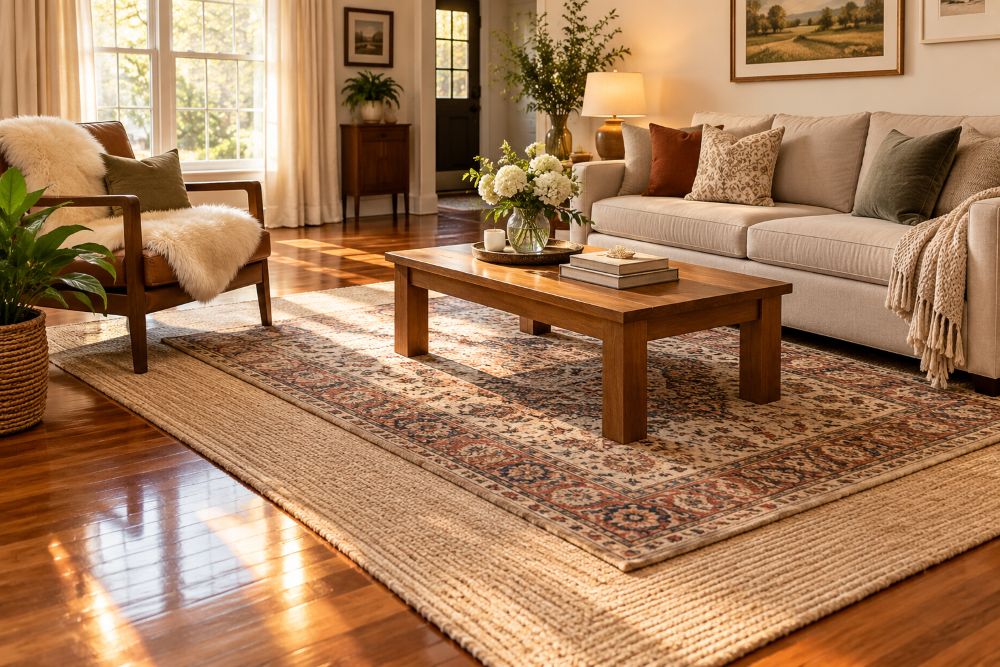
If you have hardwood floors, show them off instead of hiding them under wall-to-wall carpet. Clean and polish them so they glow, then add a large area rug to anchor the furniture.
A faux sheepskin adds softness in a bedroom or reading corner, and vintage or slightly faded rugs from flea markets and secondhand shops bring a lot of character. You can even layer a smaller rug on top of a larger neutral one for a collected look. The most common mistake is choosing a rug that’s too small. In a living room, at least the front legs of your sofa and chairs should sit on the rug.
A Simple Weekend Plan
If you’re not sure where to begin, here’s an easy way to start.
Day 1 (free to low cost): Declutter your main living area, group small items on trays, swap bulbs for warm ones and raise your curtain rods.
Day 2 (low cost): Replace cabinet hardware, add plants or fresh flowers, hang a large mirror or piece of art, and add a rug or new throw pillows.
Frequently Asked Questions
What’s the cheapest way to make a room look expensive?
Decluttering and improving the lighting. Both cost very little and change how a room looks and feels.
What makes a room look cheap?
Clutter, harsh overhead lighting, short curtains, too many clashing colors and furniture that’s the wrong size for the room.
Can I make a rental look luxurious?
Yes. Peel-and-stick wallpaper, plug-in sconces, curtains, rugs, plants and swappable hardware all work well, and you can put the original hardware back when you move.
Which room should I start with?
Start with the room you use and see the most, usually the living room or bedroom.
Is it worth spending more on anything?
Yes. Spend on the things you use daily, like your sofa and mattress, and save on decor and accessories.
Final Thoughts
A home that looks expensive is usually one that looks intentional. You don’t need to change everything at once. Start with decluttering and lighting, then add one layer at a time, like color, curtains, hardware, plants and art. Small upgrades add up, and before long your space will feel like a little luxury retreat.
If you found these ideas helpful, save this post to your Pinterest board so you can come back to it when you’re ready for your next home refresh.